

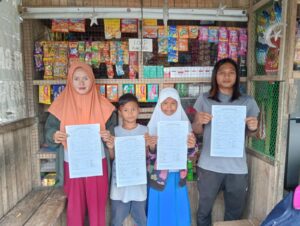
 In the Municipality of Butig, Lanao del Sur, 31-year-old Jaharah Camid lives with her husband and two children. Together, they run a small sari-sari store that serves as a local source for goods in the community. However, the daily earnings from the store are often not enough to meet their basic needs.
“Thank you so much. My children and I finally have our birth certificates. I hope you can help many more.”
Despite financial challenges, Jaharah remains committed to her children’s education. She ensures they continue attending the nearby public school, with the hope of giving them a better future. However, their limited income has made it difficult to afford the costs associated with processing their own and their children’s birth certificates. One major challenge is the need to travel to PSA Iligan, Lanao del Norte, to secure a Negative Certificate. This results in additional expenses for the family, including transportation (approximately 4 hours of travel), food, and the payment for the certificate itself. Furthermore, the requirement for online registration to set an appointment has been a challenge for Ms. Jaharah due to limited access to digital and skills.
Through the Birth Registration Project implemented by Community and Family Services International (CFSI), with support from UNHCR and collaborative partnership with Ministry of Social Services and Development (MSSD), and the Local Government Units (LGUs) of Butig—unregistered children and their families were finally given the attention and assistance needed to secure free birth registration. Jaharah and her family were among those prioritized by the initiative.
On 13 March 2025 during the Ceremonial Handover of Certificates of Live Birth, Jaharah and her children finally received their birth certificates. “Maraming salamat po. May birth certificate na kami at mga anak ko. Sana marami pa kayong matulungan” Jahara expressed. (“Thank you so much. My children and I finally have our birth certificates. I hope you can help many more.”)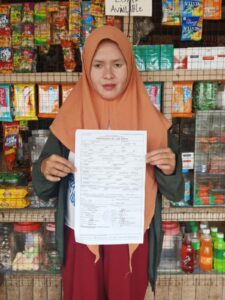
This moment was a turning point for Jahara’s family. With official documentation, her children are now better positioned to access the services and support they need. Her words reflect the deep impact of this initiative on families who have long lived without legal identity and access to basic services. Jaharah’s story is powerful testament to the importance of civil registration and transformative power of collaborative efforts—not just for her family, but for entire communities in need of birth documentation.
Jahara is now a proud advocate of civil registration, encouraging fellow residents to participate in birth registration initiatives. Her journey from being undocumented to becoming officially recognized reflects not only a personal success but also a brighter, more secure future for her family and her community.
CFSI leads the social mobilization component of the Birth Registration Initiative and works closely with other key partners of the Initiative for Promoting Digital Birth Registration. These include the Ministry of Social Services and Development (MSSD), the Philippine Statistics Authority-BARMM (PSA-BARMM), the Office of the Presidential Adviser on Peace, Reconciliation, and Unity (OPAPRU), UNHCR Philippines, UNICEF Philippines, and Relief International (RI).
This initiative is part CFSI’s Birth Registration Project (BRP) in the Bangsamoro Autonomous Region in Muslim Mindanao (BARMM) and Sulu, implemented by CFSI, with support from UNHCR under the Japan-funded Initiative for Promoting Digital Birth Registration. It aims to facilitate the birth registration of 30,000 individuals across 50 municipalities, focusing on populations at risk of statelessness—including unregistered Sama Bajau children in displacement contexts due to armed conflict, their families, and children of Philippine Descent in migratory settings, particularly those in Sabah. In support of the Philippine government’s normalization process, the initiative also covers decommissioned combatants and their families.
–
Story by: Nabilah Macalbe